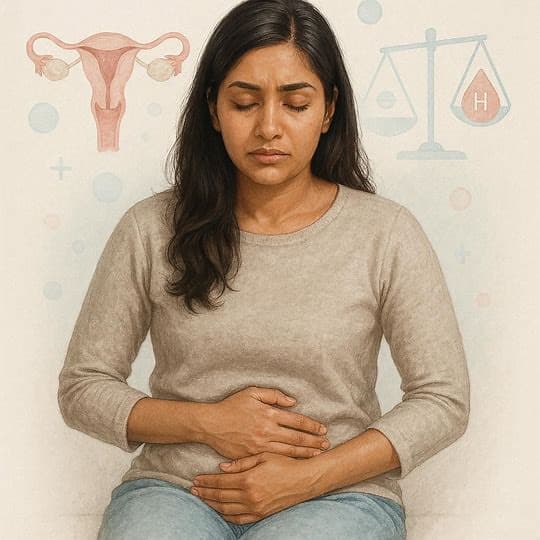


Why do women with PCOS diet harder and still lose nothing?
This question comes up again and again. Women with PCOS measure food, log calories, cut portions, and follow the rules better than almost anyone else. And yet, nothing happens. The scale stays stuck.
What makes it disturbing is watching other people lose weight on the same calories. A friend takes in 1500 calories and drops weight. A woman with PCOS eats the same and just feels tired, hungry, and defeated.
This isn’t a discipline issue. It’s not bad tracking. And it’s definitely not because women with PCOS are “eating more than they think.” The real problem is simpler and more unfair. Calorie counting assumes all bodies respond the same way. PCOS bodies don’t.
PCOS: Not Just a Period Problem

PCOS (Polycystic Ovary Syndrome) is a hormonal condition that has effects on metabolism, androgen levels, and ovulation. PCOS is now primarily recognized by medical professionals as a metabolic disorder, even though it is frequently treated as a reproductive disorder.
A large number of women with PCOS have insulin resistance, even at a normal body weight. This affects where fat is stored, how easily fat can be released, and how calories are processed. As a result, standard weight loss advice often fails in PCOS.
Insulin Resistance: The Part Everyone Ignores

Insulin is a hormone responsible for the transport of glucose from the bloodstream into cells for energy or storage. When insulin works accurately, only a small amount is required. In insulin resistance, cells stop responding effectively.
To keep blood sugar normal, the body compensates by producing more insulin.
High insulin levels create three major problems for fat loss:
Insulin strongly promotes fat storage
Insulin blocks fat breakdown
Insulin prevents the body from accessing stored energy
This is the core reason PCOS insulin resistance makes weight loss difficult, regardless of calorie intake.
Why Eating Less Doesn’t Lead to Fat Loss in PCOS

The idea behind calorie count is simple: eat less and burn more, and you will lose weight. This works when hormones cooperate. In PCOS, insulin resistance breaks this logic.
When insulin levels remain high, the body prioritizes energy storage over energy release. Fat cells can stay locked even during a calorie deficit. Instead of burning calories, the body looks for energy anywhere else, often by breaking down muscle or making metabolism.
This is why two people can eat the same calories and experience completely different outcomes. One can access stored fat. The other cannot.
As a result, many women experience:
- Very slow or zero weight loss
- Fat loss plateaus despite strict dieting
- Loss of muscle instead of fat
- Extreme hunger at relatively low calories
The calorie composition exists on paper, but the body does not treat it as a fat loss partner.
When Dieting Backfires: Hormones and Metabolism in PCOS

When calories are harmfully lowered, the body adapts. Everyone experiences this to some extent, but insulin-resistant women experience it more intensely.
In PCOS, calorie restriction can trigger:
- A drop in resting metabolic rate
- Increased cortisol
- Worsening insulin resistance
The body enters a survival mode where fat loss becomes less important than energy conservation. This tells why low-calorie diets often cause women with PCOS to feel cold, fatigued, mood-swingy, and mentally disturbed.
Rather than burning fat, the body saves energy. Metabolism slows down, hunger increases, and progress stalls.
Many women with PCOS fail not because they do too little but because they follow advice that ignores insulin.
So What Actually Works?
When the body's focus shifts from calorie restriction to hormone and insulin management, PCOS weight loss becomes more achievable. The goal is to help the body release calorie fat, not to simply eat less.

Key principles include:
- Prioritizing protein to stabilize the blood sugar level
- Focusing on strength training schedules instead of excessive cardio, as muscle recovers to glucose uptake without increasing stress hormone levels
- Eating enough to feel satiated and energized, rather than chronically underfueling
- When insulin resistance is handled, the body becomes more willing to let go of stored calories/fat, and weight loss no longer feels like a constant war.
Frequently Asked Questions
Why does calorie counting fail in women with PCOS?
Because many women with PCOS have insulin resistance. High insulin levels push the body to store fat and block fat breakdown, even when calories are reduced.
Can women with PCOS lose weight without counting calories?
Yes. Many women with PCOS see better results when they focus on blood sugar control, protein intake, and strength training instead of strict calorie tracking.
Why do women with PCOS feel hungrier on low-calorie diets?
Insulin resistance and hormonal shifts increase hunger signals and slow metabolism, which makes low-calorie diets feel much harder for women with PCOS.
Does insulin resistance really stop fat loss in PCOS?
Yes. Insulin resistance keeps fat cells in storage mode, making it difficult for the body to access and burn stored fat, even during a calorie deficit.
What works better than calorie counting for PCOS weight loss?
Managing insulin through balanced meals, enough protein, resistance training, good sleep, and lower stress works better than simply eating less.